

The destination rewards planning as much as it rewards showing up. Sedona draws roughly 3 million visitors annually, and the difference between a transcendent trip and a frustrating one often comes down to timing, reservations made weeks in advance, and knowing which trailhead to hit at 6:45 a.m. versus 10.
This guide covers everything — when to go, what to do, where to eat, and where to stay — with enough detail to plan confidently.
TL;DR: What to Know Before You Plan
- Best seasons: March–May and September–November offer the best hiking conditions; skip mid-March spring break
- You need a rental car — trails, restaurants, and neighborhoods can sit 15–20 miles apart
- Book ahead: Pink Jeep tours, balloon rides, top restaurants, and lodging all fill weeks out during peak season
- Start early: Aim for trailheads by 7 a.m. to avoid both heat and crowds
- Plan for 3–5 days to see Sedona without feeling rushed — a private home gives groups and families room to decompress between outings
When to Visit Sedona
The Best Windows
Spring (March–May) is peak season for good reason. Temperatures climb from the mid-60s into the low 80s°F, wildflowers appear on canyon floors, and trails are dry and accessible. The tradeoff: it's the busiest time of year, and parking lots at popular trailheads fill before sunrise on weekends.
Fall (September–November) offers nearly identical conditions with noticeably thinner crowds. October and November are the best months overall — comfortable temperatures, excellent stargazing, and a calmer pace throughout.
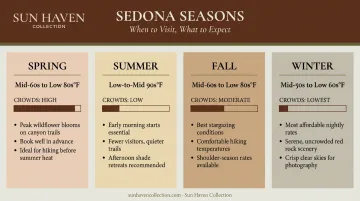
Summer runs hot, with highs in the low-to-mid 90s°F. Entirely manageable with an adjusted schedule:
- Start every outdoor activity before 8 a.m.
- Plan midday around pool time or indoor stops
- Take advantage of lower accommodation rates
Winter brings the smallest crowds and the most affordable prices. Highs sit in the mid-50s to low 60s°F, with cold mornings and occasional trail mud after rain. If solitude matters more to you than warmth, winter delivers.
The One Period to Avoid
For all its appeal, spring has one exception worth planning around: mid-March spring break. The City of Sedona deploys traffic control assistants during busy spring break weeks, with SR 179 congestion heaviest from 11 a.m.–4 p.m. Trail parking lots fill before sunrise. Restaurant waits stretch for hours. The kind of quiet that makes Sedona meaningful becomes nearly impossible to find.
If March is your only option, go late March or early — not mid.
One logistical note: Arizona does not observe Daylight Saving Time. If you're booking sunrise hikes or restaurant reservations from another time zone, account for the offset — Arizona runs on Mountain Standard Time year-round.
Top Things to Do in Sedona
Pink Jeep Tours: Broken Arrow
The Broken Arrow tour is a 2-hour off-road experience over steep descents, climbs, and formations no standard vehicle can access. Pink Jeep is the only off-road outfitter permitted on this trail, so there's no equivalent alternative. Guests get narrated geology and history throughout. Tours sell out fast — book as early as possible.
The Vortex Experience
Sedona's four primary vortex sites — Airport Mesa, Bell Rock, Cathedral Rock, and Boynton Canyon — are locations where the earth's energy is said to concentrate, drawing meditation practitioners, spiritual seekers, and the genuinely curious alike. Each overlaps with one of Sedona's most scenic hiking areas, so you'll likely visit them regardless.
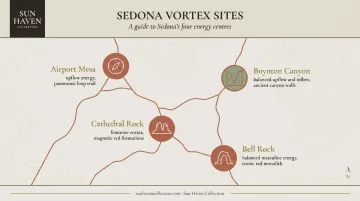
Guided vortex tours are available if context and ritual matter to your experience. Solo visits work just as well — the sites themselves are accessible to any hiker.
Chapel of the Holy Cross
Built directly into the red rock cliffs and completed in 1956, the Chapel of the Holy Cross is an architectural landmark worth stopping for even if religious significance isn't part of your trip. The views from the overlook are panoramic.
A few practical notes:
- Allow 20–30 minutes for the visit
- Early morning arrivals see noticeably thinner crowds
- No reservations required
Tlaquepaque Arts Village and the Art Scene
Tlaquepaque (pronounced tla-keh-PAH-keh) is a Spanish Colonial-style outdoor village with galleries, artisan studios, and restaurants set among preserved sycamore trees. It's a genuine contrast to the main downtown strip, which skews more souvenir-shop than arts destination. Worth an hour or two on any itinerary.
Ballooning and Stargazing
Hot air balloon rides at sunrise with companies like Red Rock Balloons — which operates 365 days a year, weather permitting — offer the most dramatic view of the landscape. In the evening, Sedona's International Dark Sky Community designation (one of the first eight in the world, designated in 2014) makes guided stargazing a genuinely excellent experience. Balloon rides typically book out 2–4 weeks ahead during peak season, so reserve early for both.
Best Hikes in Sedona for Every Level
The Sedona Red Rock Ranger District covers 400 trail miles, ranging from flat creek walks to technical scrambles. The most iconic hikes draw the most crowds, so early starts and a Red Rock Pass are non-negotiable for several trailheads.
| Hike | Distance | Difficulty | Key Notes |
|---|---|---|---|
| Cathedral Rock | 1.1 mi roundtrip | Strenuous | Steep scrambling; sunrise recommended |
| Devil's Bridge | ~1.8–4 mi (varies by trailhead) | Moderate | Largest sandstone arch in area; arrive before 7 a.m. on weekends |
| Airport Mesa Loop | 3.3 mi loop | Moderate | Panoramic valley views; excellent at sunset |
| Boynton Canyon | 6–6.6 mi out and back | Moderate | Add Subway Cave detour; Red Rock Pass required |
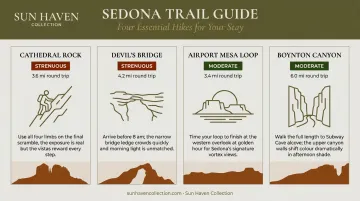
Cathedral Rock
Cathedral Rock earns its reputation. The USFS trail is just 1.1 miles roundtrip, but 669 feet of elevation gain comes through exposed rock scrambling. Sunrise timing gets you dramatic light and available parking. It's also one of Sedona's four recognized vortex sites.
Devil's Bridge
The largest natural sandstone arch in the Sedona area. Distance depends on your starting point: roughly 1.8 miles from the Devil's Bridge Trailhead, or around 4 miles via the Mescal/Chuckwagon route. The longer Chuck Wagon approach offers more distance and noticeably fewer crowds. Arrive before 7 a.m. on weekends regardless of which route you take.
Airport Mesa Loop
Airport Mesa's 3.3-mile loop delivers 360-degree valley views and an overflow parking area that's more forgiving than most trailheads. When other lots fill by 7:30 a.m., this one often still has space. Sunset is the standout time to go.
Boynton Canyon
Boynton Canyon is the choice for a longer, more immersive day. The base trail runs 6 miles out and back. Add the detour to Subway Cave, a natural alcove carved into the canyon wall, and you're looking at a full day out.
A few things to know before you go:
- Red Rock Pass required: $5 daily, $15 weekly, or $20 annually (as of April 2026)
- Parking fills early: Arrive before 8 a.m. on busy days
- Subway Cave detour: Adds roughly 0.5–1 mile; worth it for the canyon perspective
Where to Eat and Drink in Sedona
Sedona's dining scene ranges from reservation-only spots worth planning your day around to casual stops perfect for refueling after a trail. Here's what's worth knowing before you go.
Reservation-Essential Restaurants
- Elote Cafe — Mexican-inspired, widely considered one of the best meals in Sedona. Reservations open 60 days in advance and fill quickly. Book the moment the window opens.
- Mariposa — Latin grill with floor-to-ceiling red rock views. Lunch gives you the scenery without dinner pricing pressure.
- The Hudson — Chef-driven American menu, strong patio, open daily for lunch and dinner.
Casual and Post-Hike Options
- Wildflower Bread Company — A go-to for breakfast with red rock views
- Local Juicery — Post-hike smoothies and bowls
- Tlaquepaque area restaurants — Relaxed midday stops without the reservation pressure
Verde Valley Wine Trail
The Verde Valley Wine Trail connects tasting rooms across Cottonwood, Clarkdale, and Jerome — roughly 20–30 minutes from central Sedona. It makes a worthwhile half-day excursion, particularly in fall when the canyon light is at its best.
Weekends draw the biggest crowds. Book tastings in advance to avoid showing up to a full tasting room.
Where to Stay in Sedona
Setting Expectations on Price
Sedona accommodation costs run notably higher than comparable US destinations, especially during spring and fall. The value proposition is proximity to trails and views — not necessarily the room itself. Budget accordingly, and book 2–3 months in advance for any spring or fall travel.
Hotel Options
- Luxury: Enchantment Resort (Boynton Canyon) and L'Auberge de Sedona (Oak Creek) — both verified, both requiring long advance booking
- Mid-range: Sky Ranch Lodge for views at a lower price point; The Wilde Resort in West Sedona
- Location note: West Sedona provides easier trail access and a quieter feel; uptown/downtown is walkable to restaurants but noisier
Private Home Stays
For groups, families, couples on longer trips, or anyone wanting more space than a hotel room provides, a private home suits Sedona particularly well. The landscape invites lingering: you want a kitchen for early mornings before a hike, enough space to decompress after a full day outdoors, and a patio where the light does something worth watching.
Sun Haven Collection offers three Sedona properties, each positioned in West Sedona or elevated residential areas with 360-degree red rock views and direct access to trail systems:
- Desert Solace at Bristlecone — Sleeps 16 across 8 bedrooms; hot tub, panoramic views, equestrian facilities on property; suited for large groups and wellness-focused travel
- Mesa Vista on Cline — Sleeps 12 across 6 bedrooms; private pool, hot tub, indoor gym with temperature control; ideal for bachelorette weekends, pre-wedding stays, and active groups
- Dry Creek Sunstone Home — Sleeps 12 across 7 bedrooms; located on Dry Creek Road with proximity to Dry Creek trail systems; outdoor putting green, EV charger, multiple gathering spaces
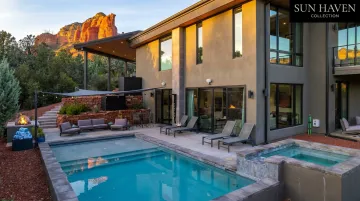
All three include concierge support, keypad check-in, and optional experience packages covering fully stocked arrivals, private chef dinners, guided hike planning, and wellness programs. The design across all three is grounded in natural materials and calm tones — spaces that let the landscape carry the atmosphere.
Essential Planning Tips Before You Go
Getting There and Getting Around
Most visitors fly into Phoenix Sky Harbor, 117 miles and 2 hours from Sedona via I-17. A rental car is non-negotiable — book it early, as availability tightens significantly during peak season.
The Sedona Shuttle is a free, city-operated service running Thursday–Sunday that serves Cathedral Rock, Little Horse, Soldier Pass, Dry Creek Vista (with Devil's Bridge access), and Mescal trailheads. It solves the parking problem at the most congested trailheads — use it whenever your schedule allows.
What to Pack
- Layers — morning temperatures can be 25–30°F cooler than afternoon highs in spring and fall
- Grippy hiking shoes — red rock surfaces are slippery, especially when wet
- High-SPF sunscreen — Sedona sits above 4,000 feet with limited trail shade
- More water than you think you need — the dry air and elevation accelerate dehydration faster than most visitors expect
Visiting with Care
Visit Sedona publishes the Sedona Cares Pledge — a framework asking visitors to protect the landscape they came to experience. With 3 million annual visitors, the pressure on these trails is real. The core commitments are straightforward:
- Stay on marked trails
- Avoid geotagging sensitive locations
- Pack out all waste
- Respect natural quiet
Small choices compound across millions of visits. The trails that make Sedona worth the trip stay that way only when visitors treat them accordingly.
Frequently Asked Questions
How many days in Sedona is enough?
Three days covers the key hikes and experiences without feeling completely rushed. Four to five days allows for a relaxed pace with room for day trips, winery visits, and actual downtime.
What is the best month to go to Sedona?
October and November offer the best overall combination: comfortable temperatures, reduced crowds compared to spring, and excellent conditions for both hiking and stargazing. April and early May run a close second.
What is the Secret 7 in Sedona?
The Sedona Secret 7 is a local initiative highlighting seven scenic viewpoints — ranging from easy to moderate access — designed to distribute visitor traffic beyond the most popular spots. The Visit Sedona website publishes the current list with a map.
Do you need a car to get around Sedona?
Yes. Trails, restaurants, and neighborhoods are spread across a wide area. The free shuttle covers select trailheads Thursday–Sunday but doesn't reach everywhere you'll want to go — a rental car remains essential.
Is Sedona worth visiting in summer?
Yes — summer hiking is manageable with the right timing. Start every outdoor activity before 8 a.m., plan midday around pools or air-conditioned stops, and take advantage of lower accommodation rates and noticeably thinner crowds.
What is a vortex in Sedona?
Vortexes are sites where the earth's subtle energy is believed to spiral upward or inward, said to intensify meditation, emotional clarity, and healing. The four main sites — Airport Mesa, Bell Rock, Cathedral Rock, and Boynton Canyon — each overlap with Sedona's most scenic hiking destinations.